Natural antioxidants
Fat turns rancid when it meets air. A natural antioxidant slows this down. It is used in anything that carries fat: vegetable oil, frying oil, meat products, sauces and snacks.
Two products are listed here: rosemary extract and tocopherol concentrate. Both dissolve in oil. Both are food additives and are labelled with their function: "antioxidant: rosemary extract" or "antioxidant: E392".
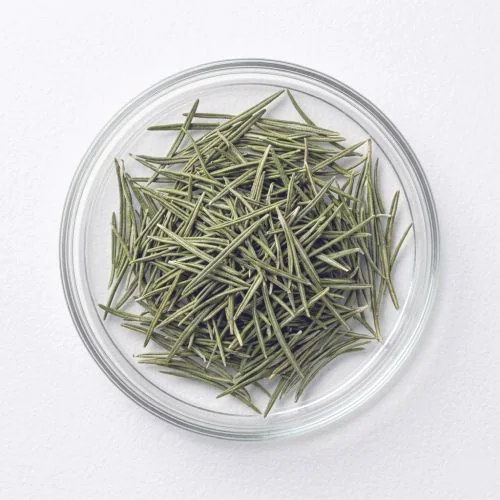
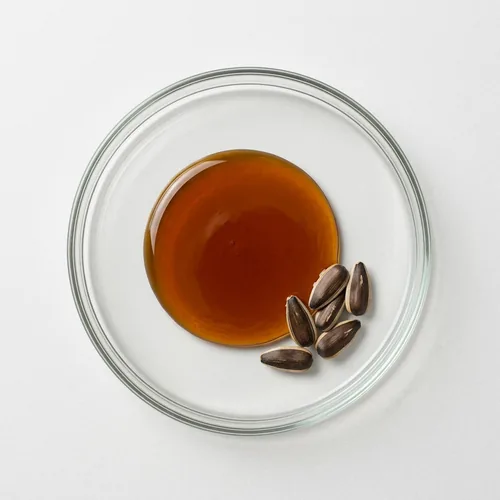
Filter these products in the catalog ›
Dose and regulation
| Rosemary extract | Tocopherol concentrate | |
|---|---|---|
| Additive number (EU, Türkiye) | E392 | E306 |
| Measured as | carnosic acid and carnosol | total tocopherols |
| In the product | carnosic acid min. 10% | total tocopherols min. 70% |
The E392 limit applies to carnosic acid plus carnosol, not to the extract. In the EU and Türkiye the maximum is 30 mg per kg of fat in oxidation-prone vegetable oils and 50 mg in frying oil. The amount of extract to add is calculated from the carnosic acid value on the TDS.
With tocopherols, the effect depends on the dose. Too little does little; too much can speed up oxidation. The right amount depends on the oil's own tocopherol content and is found by testing.
From the library
- Carnosic acid
Carnosic acid is the primary oil-soluble phenolic compound of rosemary leaf. Together with carnosol, it accounts for over 90% of the antioxidant activity of rosemary extract. Food producers …
- E392: rosemary extracts
E392 (E 392) is the European Union food additive number for extracts of rosemary. It is used in food as an antioxidant. Its job is to slow down …
- Tocopherols
Tocopherol is the natural antioxidant of vegetable oils: it delays rancidity, and is used up while doing so. It comes in four forms: alpha, beta, gamma and delta. …