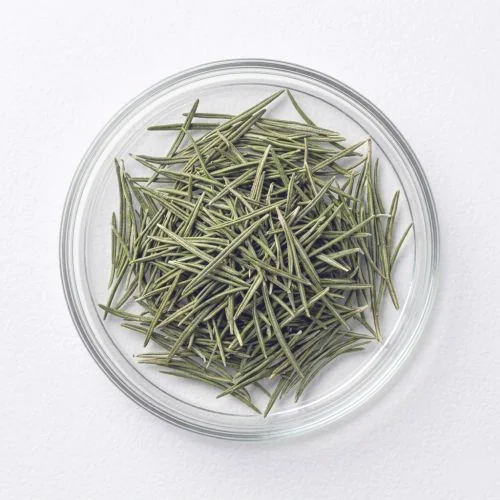
Rosemary Antioxidant Extract (>10% carnosic acid in oil)
Rosmarinus officinalis
Documents
Product Information
- Manufacturer
- AltraFlora
- Type
- CO2 Extract (single)
- Sector
- Food/SuperFoodNutraceuticalsCosmeceuticals
- INCI
- Rosmarinus Officinalis Leaf Extract
- CAS
- 3650-09-7
- SKU
- AF-ANOX1TSF
- Carnosic acid
- >10%
- Analytical method
- HPLC (in-house method)
- Appearance
- Dark-brown, viscous solution
- Solubility
- Soluble in oil, insoluble in water
- Shelf life
- 24 months
- Packaging
- 1–5 kg/bottle, 10–25–50 kg/drum
- Summary
- SFE Rosemary Antioxidant Extract (>10% carnosic acid in oil, 1 kg)
Add to Queue
or
About
Rosemary Antioxidant Extract is a dark-brown, viscous solution of supercritical CO₂ extract from Rosmarinus officinalis leaves in deodorised sunflower oil, standardised to more than 10% carnosic acid (CAS 3650-09-7), with carnosol (CAS 5957-80-2) below 1%. E392 is the EU food additive number for rosemary extracts.
Functional Properties
Carnosic acid is a phenolic diterpene with potent antioxidant activity—it scavenges free radicals and inhibits lipid peroxidation. This antioxidant-focused variant has minimal volatile content (<0.5%), making it odourless and suitable for applications where rosemary aroma is undesirable.
Quality
Supercritical CO₂ extraction yields a solvent-free extract, supplied in deodorised sunflower oil with no additives. Heavy metals non-detectable. HPLC-verified carnosic acid content. Oil-soluble, insoluble in water.
Applications
- Food & Beverage (E392): Oils 0.05%, meat 0.04%, sauces 0.10%, seasonings 0.20%, supplements 0.40%
- Nutraceuticals: Cognitive support, neuroprotective formulations
- Cosmetics: Anti-aging products, natural preservation systems
Frequently asked questions
- What does E392 mean?
- E392 is the EU food additive number for rosemary extracts (Regulation (EU) No 1129/2011). It applies specifically to rosemary extracts and does not extend to sage extracts.
- Which parameter is the extract standardized to?
- By carnosic acid (CAS 3650-09-7): >10% by HPLC, with carnosol (CAS 5957-80-2) below 1%.
- Will the extract impart a rosemary aroma to the product?
- The sum of volatiles (borneol, bornyl acetate, camphor, 1,8-cineole, verbenone) is kept below 0.5%, so the sensory impact on the formulation is minimal.
- What is the typical dosage?
- In food applications, 0.05-0.5% by weight depending on the product category. The exact value is determined by the formulation and applicable regulation.
- What documents are provided?
- The technical data sheet (TDS) and safety data sheet (MSDS) are available on the product page. The batch certificate of analysis (COA) is provided on request together with a sample.